The Sun is the star at the center of the Solar System. It is a massive, hot ball of plasma, inflated and heated by energy produced by nuclear fusion reactions at its core. Part of this energy is emitted from its surface as light, ultraviolet, and infrared radiation, providing most of the energy for life on Earth.
The Sun is a G-type main-sequence star (G2V), informally called a yellow dwarf, though its light is actually white. It formed approximately 4.6 billion years ago from the gravitational collapse of matter within a region of a large molecular cloud.
Key Facts
Visual Brightness
−26.74 (V)
Absolute Magnitude
4.83
Metallicity
Z = 0.0122
Angular Size
0.527–0.545°
Age
4.6 billion years
Galactic Period
225–250 million years
Composition
Hydrogen (H)
Helium (He)
Oxygen (O₂)
Temperature
Core
15,700,000 K
Photosphere
5,772 K
Corona
5,000,000 K
Velocity
Orbit Galactic Center
251 km/s
To Stellar Neighborhood
20 km/s
To Cosmic Microwave Background
370 km/s
Location in the Solar System
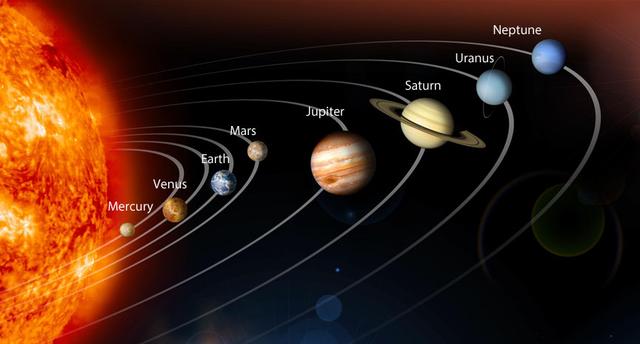
The Sun has eight known planets orbiting it. This includes four terrestrial planets (Mercury, Venus, Earth, and Mars), two gas giants (Jupiter and Saturn), and two ice giants (Uranus and Neptune). The Solar System also has nine bodies generally considered as dwarf planets and some more candidates, an asteroid belt, numerous comets, and a large number of icy bodies which lie beyond the orbit of Neptune.
Celestial Neighbourhood
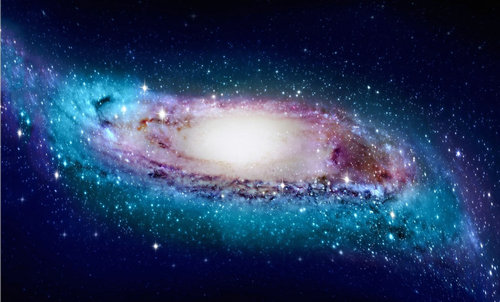
The Solar System is surrounded by the Local Interstellar Cloud, although it is not clear if it is embedded in the Local Interstellar Cloud or if it lies just outside the cloud's edge. Multiple other interstellar clouds also exist in the region within 300 light-years of the Sun, known as the Local Bubble.